
Dark Gray House With a Charcoal Roof: 7 Real Examples 2026
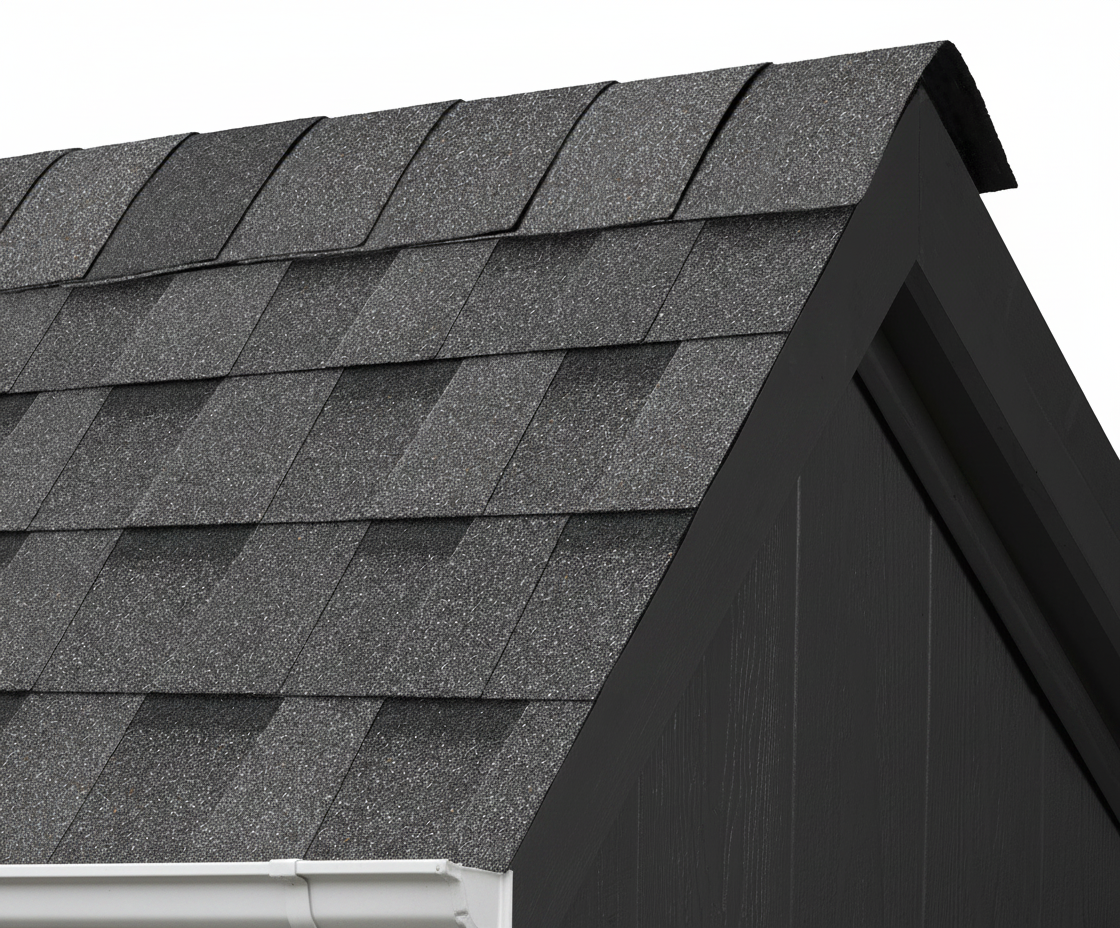
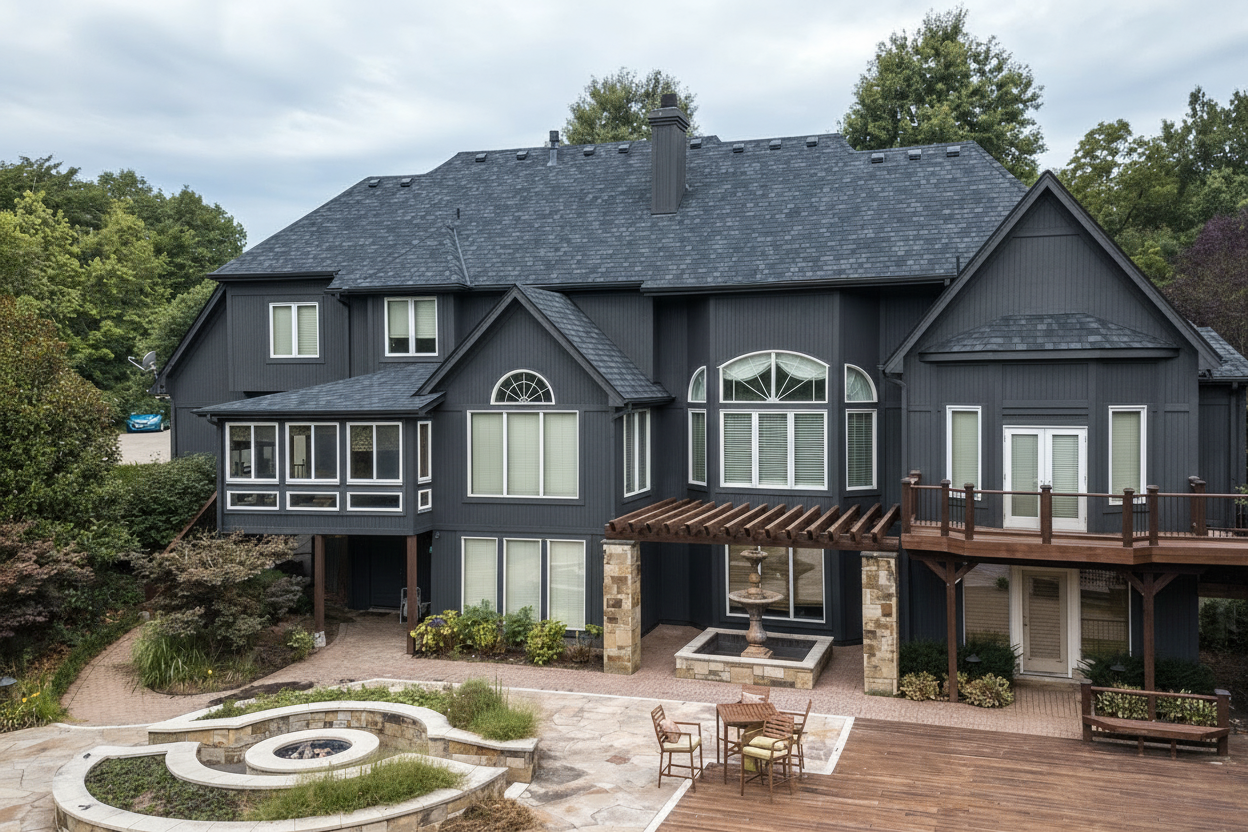
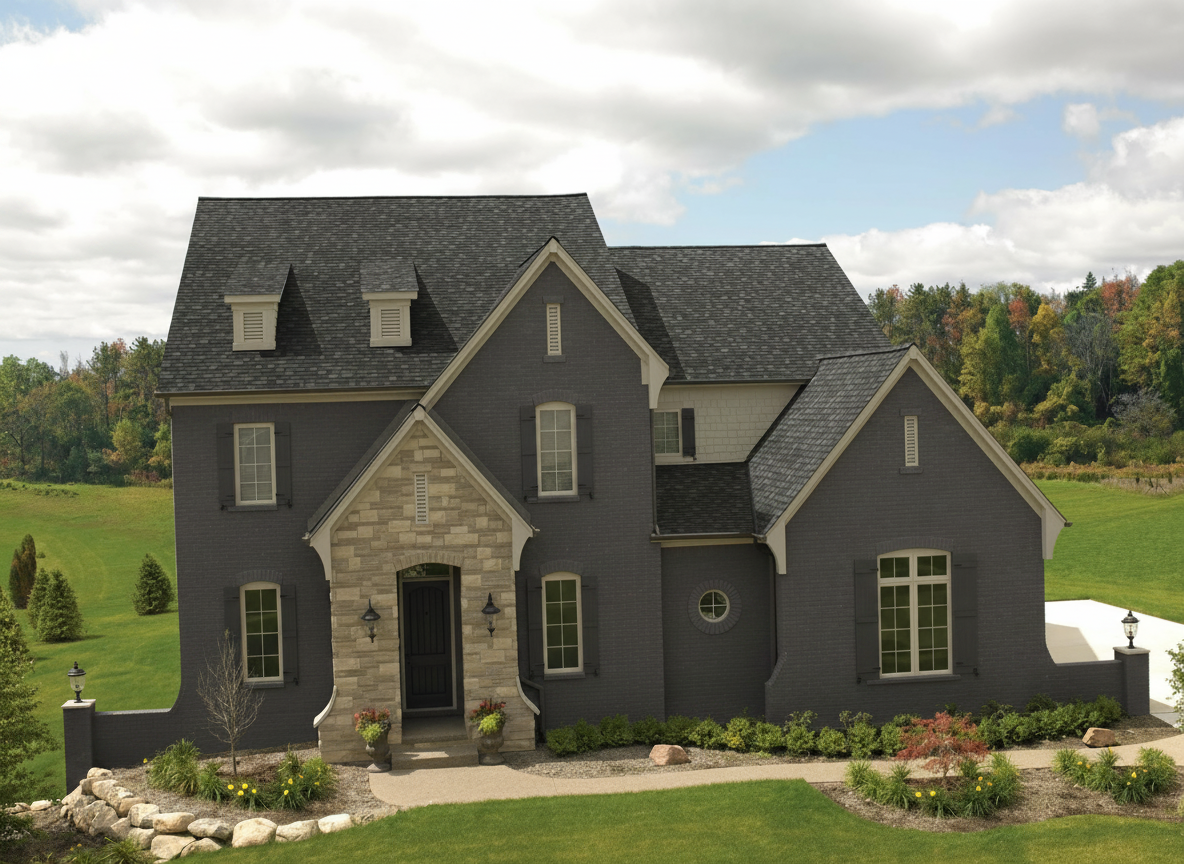
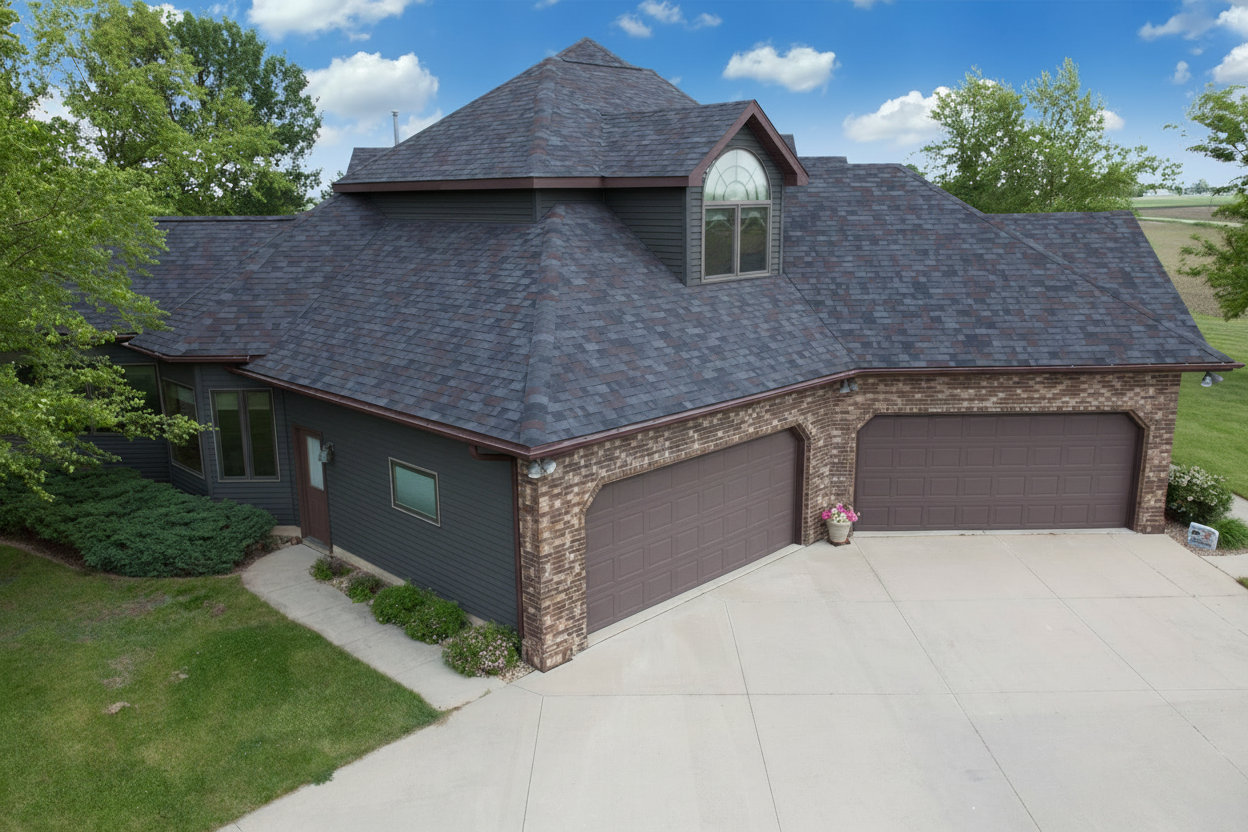
A dark-gray house with a charcoal roof is a monochromatic pairing that reads as intentional rather than understated. Both siding and roof stay in the same cool, dark register, and the granule variation in charcoal shingles gives the roofline enough texture to prevent the elevation from reading as flat.
Trim color and door color carry the personality entirely. Crisp white or warm-white trim adds the contrast the palette needs; a bold front door provides a focal point. The combination suits transitional, modern, and craftsman architecture equally well.
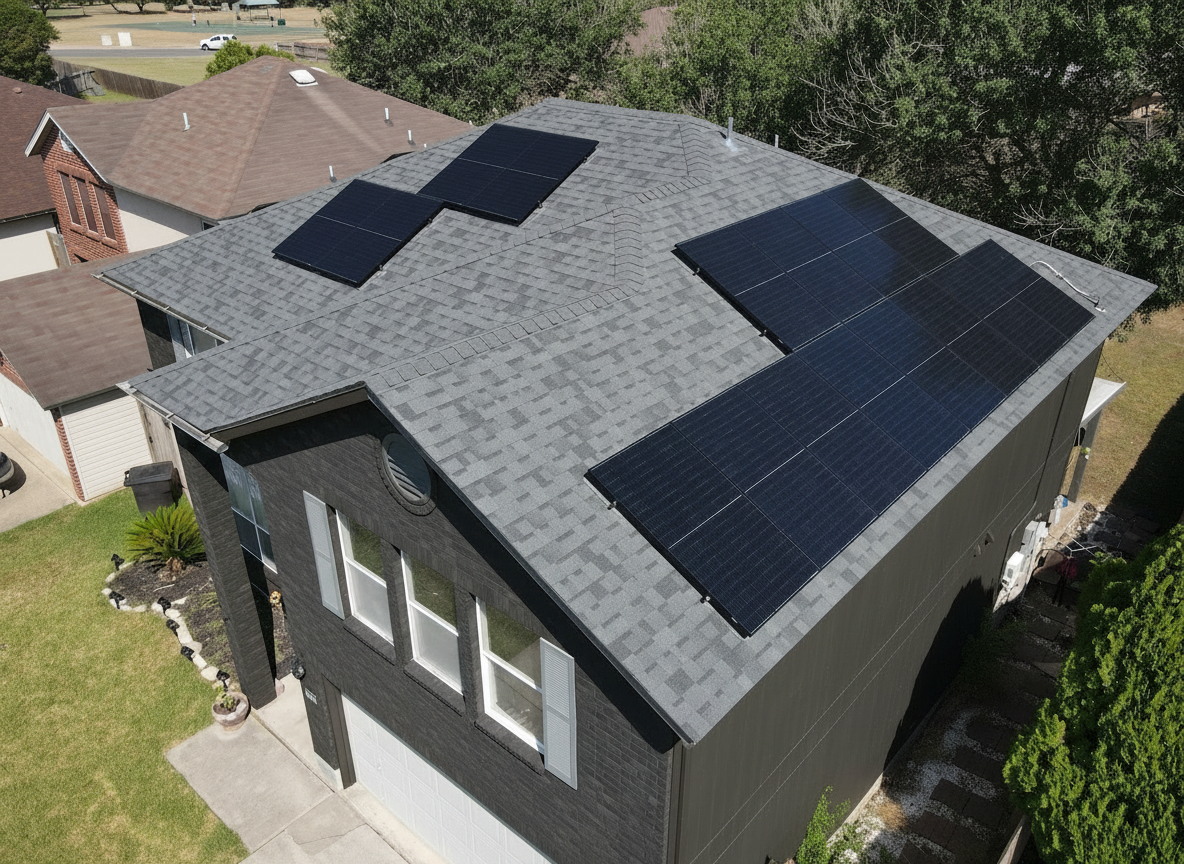
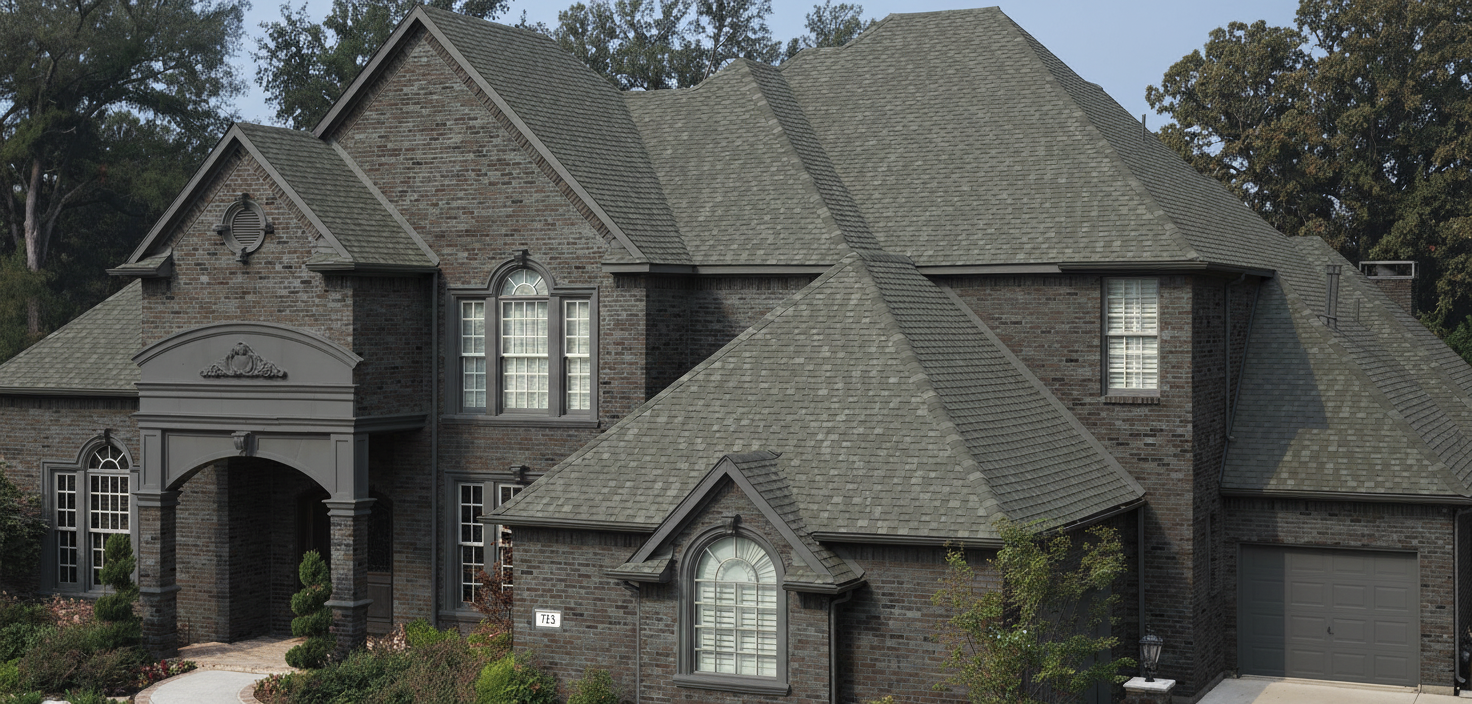
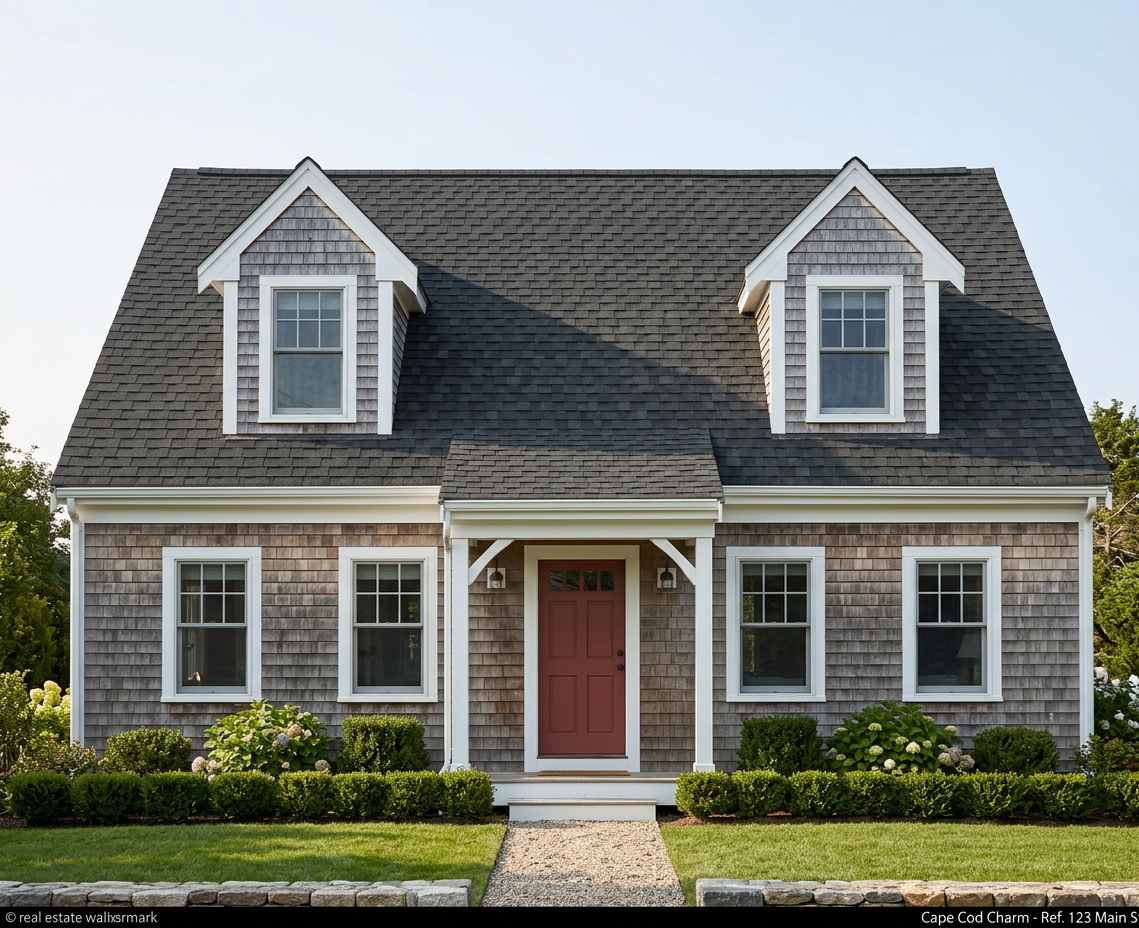
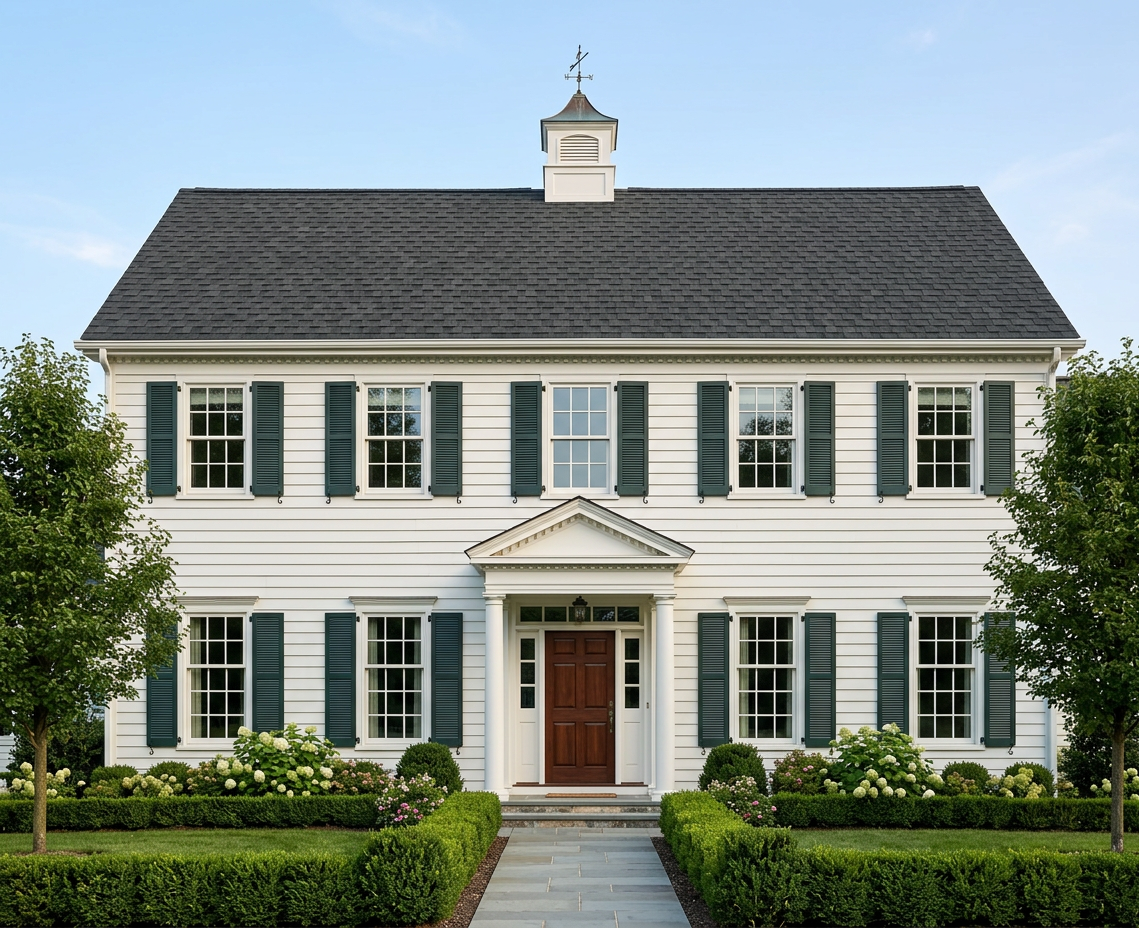
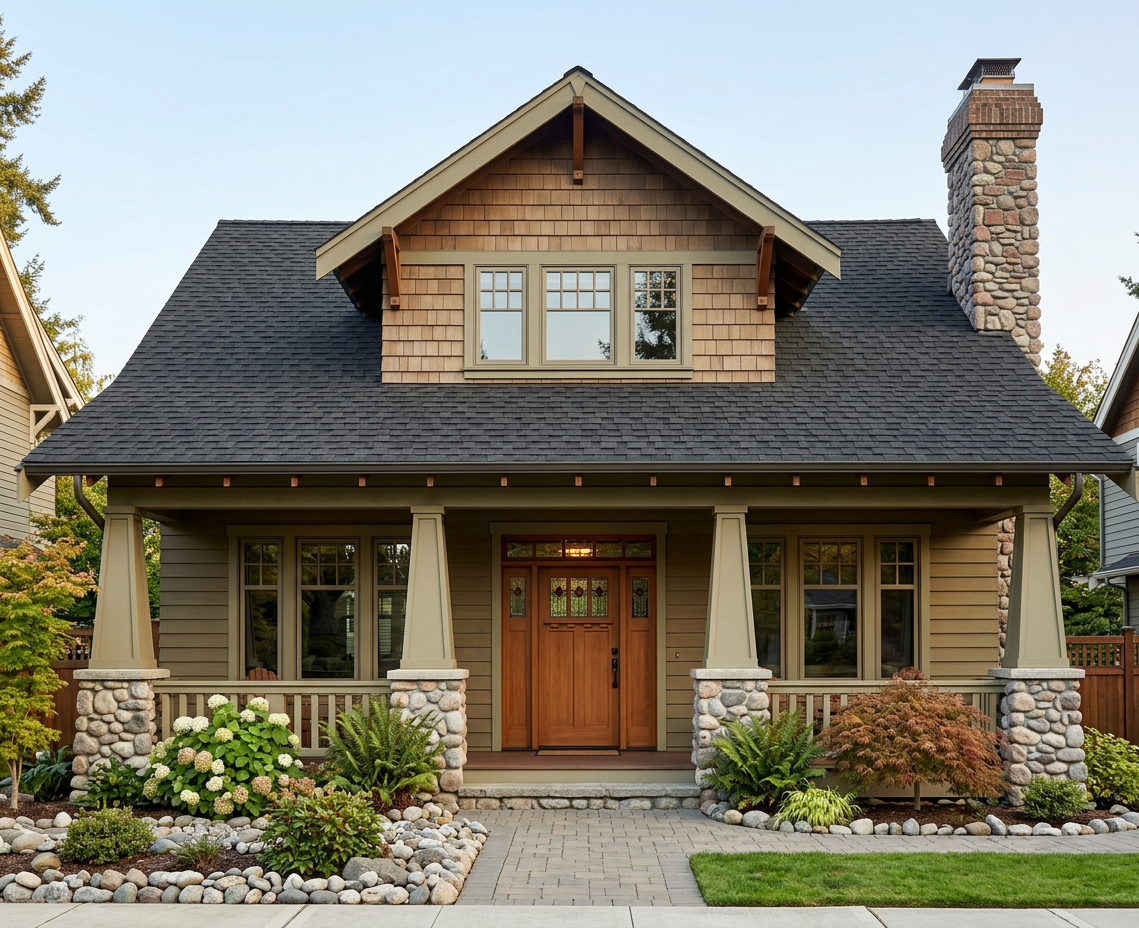
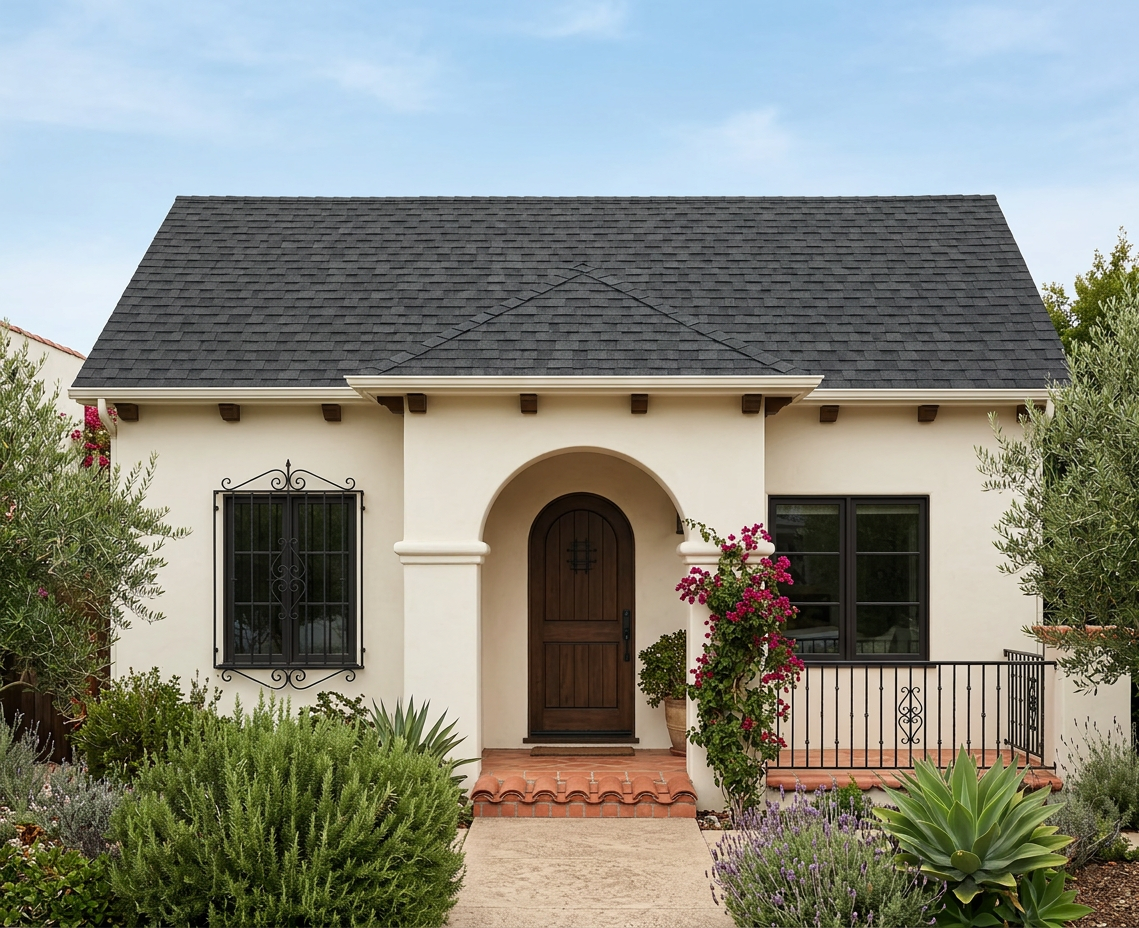
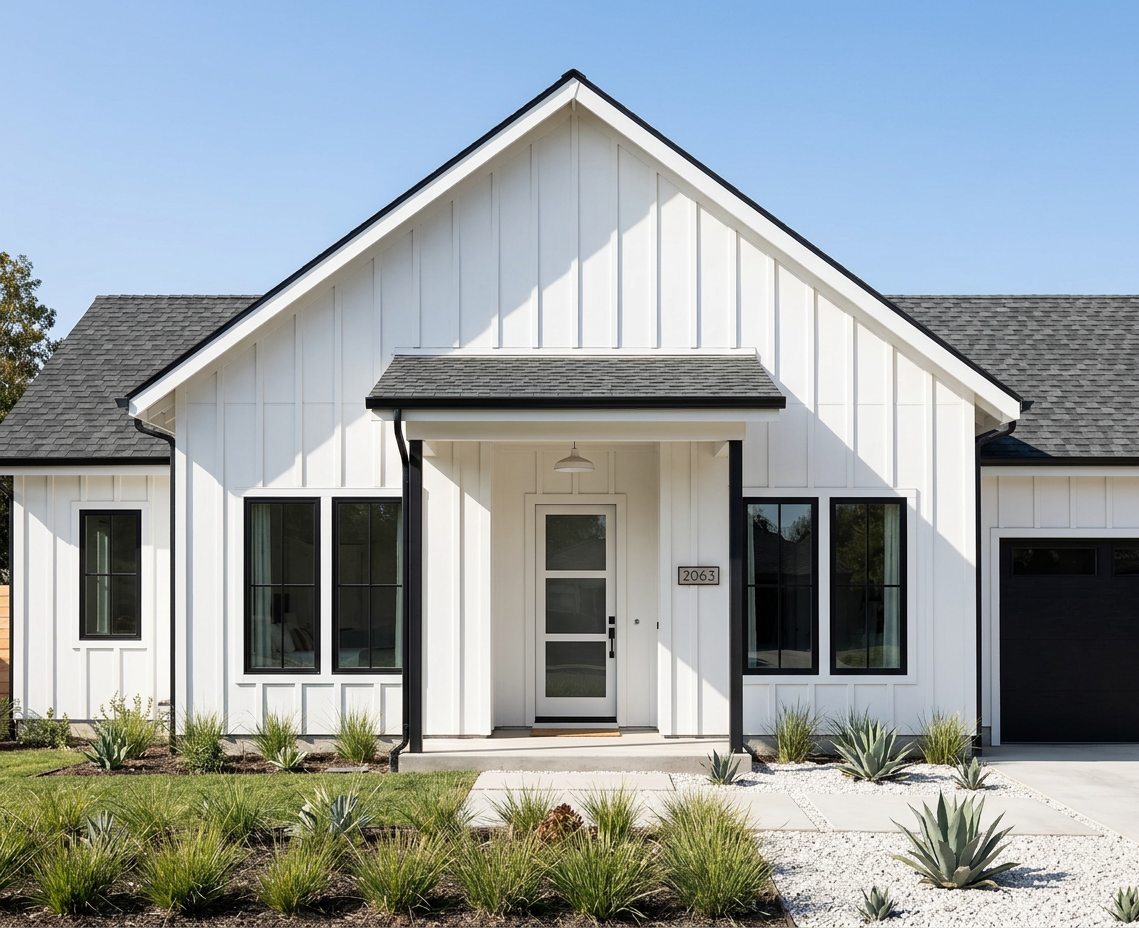
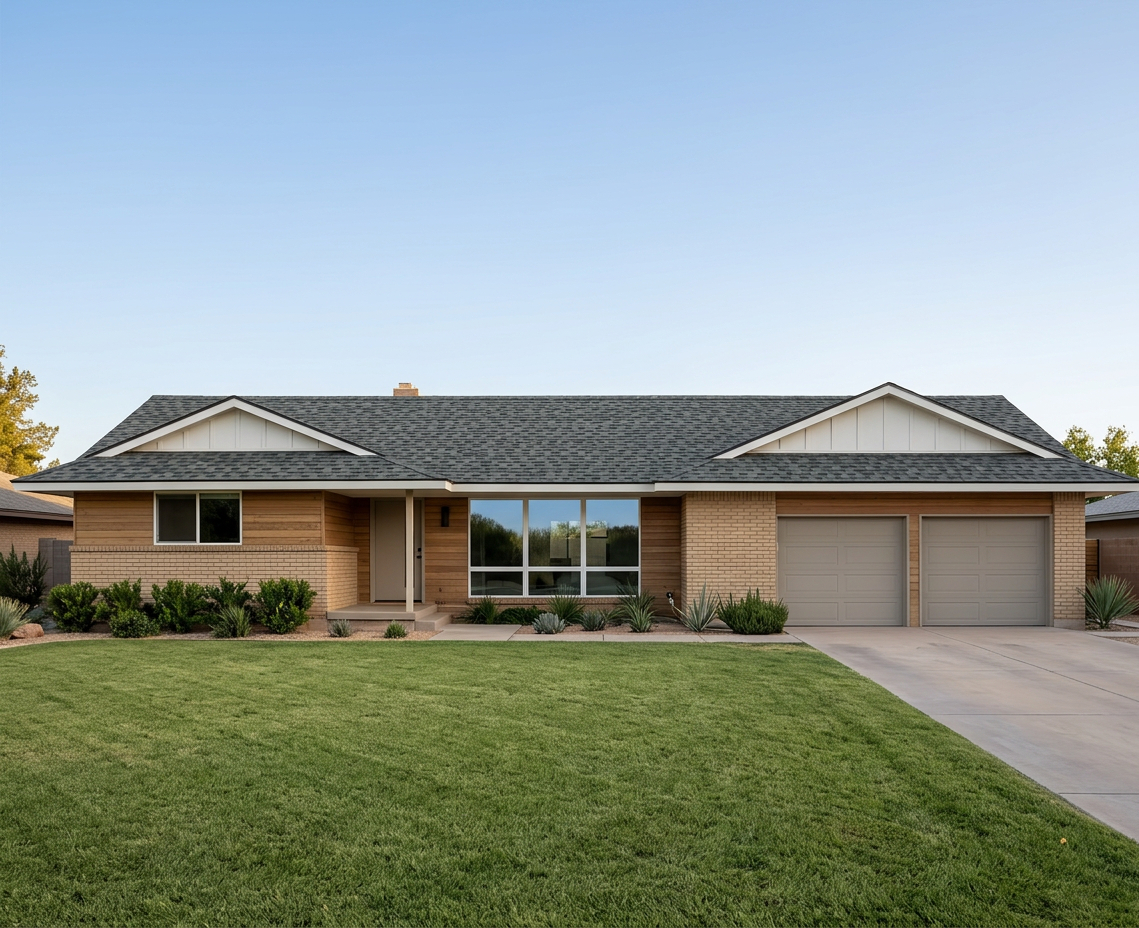
Upload a phone photo of your house and pre-load this exact dark gray-and-charcoal pairing in the visualizer. Swap to any of the recommended shingles below in one tap. No signup, no email.
Charcoal reads differently across the day.
In direct Florida overhead sun, charcoal brightens to a clear slate-gray. On cloudy days it reads almost black. The granule blend's cool undertone tends to flatter most siding colors but pulls slightly out of warmer warm-yellow or peach exteriors. Worth seeing the SKU on your specific elevation before committing.
Heat absorption is roughly 70% of a black roof.
Charcoal absorbs less solar heat than true black but more than a light gray. In Florida, expect attic temperatures to run 3 to 7 degrees Fahrenheit warmer than under a white or light-gray roof at peak summer. Proper attic ventilation closes most of that gap; monthly cooling-cost impact stays under 15 dollars in most homes.
Choose granule blend over single-color charcoal.
The premium-tier charcoal SKUs (GAF Timberline HDZ Charcoal, Owens Corning Duration Estate Gray, CertainTeed Landmark Pro Cobblestone Gray) layer two or three granule shades into the blend. From the street they collapse into one quiet charcoal; up close the texture matters. Single-color economy shingles look flat by comparison.
Pairing with cool-white trim
Most charcoal granule blends have a faint blue undertone in direct sun. Cool whites amplify the blue and the elevation reads cold. Warm whites and natural creams pair better; soft black trim (slightly warmer than the roof itself) reinforces architectural lines.
Specifying single-tone charcoal
Economy-tier charcoal shingles use one shade of granule and read as flat-gray from the street. The premium SKUs (Timberline HDZ Charcoal, Landmark Pro Cobblestone Gray, Duration Estate Gray) layer 2-3 granule shades and give the roof visible dimensional texture. Worth the small upcharge.
Underestimating the heat penalty
A charcoal roof runs about 3 to 7 degrees Fahrenheit warmer than a light-gray roof at peak Florida summer attic temperatures. Less than a true black roof, but not nothing. Proper attic ventilation and a radiant barrier close most of the gap.
The questions homeowners ask before they commit. Answered without sales spin.
Charcoal is a half-step warmer and lighter than true black. The visual difference is most obvious at midday: charcoal brightens to a clear slate-gray; true black stays nearly opaque. On a dark gray house, charcoal reads as slightly softer and more traditional; true black reads as more graphic and modern.
Warm-white window trim is the safest choice; soft-black trim (slightly warmer than the roof) is the bolder choice that reinforces the architectural lines. Avoid cool-white trim, which fights the slight blue undertone in charcoal granules.
Minimally. Modern ceramic-coated granules hold color for 25 plus years. Charcoal tends to drift slightly warmer over the first 5 years -- a barely visible shift -- then stabilizes. The shift is uniform across the roof, so the elevation never looks blotchy. Source: NRCA field-aging data.
Roughly 3 to 7 degrees Fahrenheit warmer at peak Florida summer attic temperatures. Annual cooling-cost impact runs 100 to 200 dollars more than a white or light-gray roof on a typical 2,500 sq ft home. Proper ventilation cuts that in half; radiant barriers cut it again.
No. Charcoal is the single most-installed asphalt color in the architectural category nationally. Every major brand carries at least one charcoal SKU; most carry two or three. Lead times match standard stock, typically same-week or next-week from Florida supply houses.